I received this question in 2025 from a reader that seems to be frustrated with the many problems in their lawn. They write:
Some years ago I had turf laid and eventually the red thread reared its ugly head. After years of trying to eradicate it with no real success I had new turf laid last year. It looked lovely for a while but the red thread appeared again in the spring.
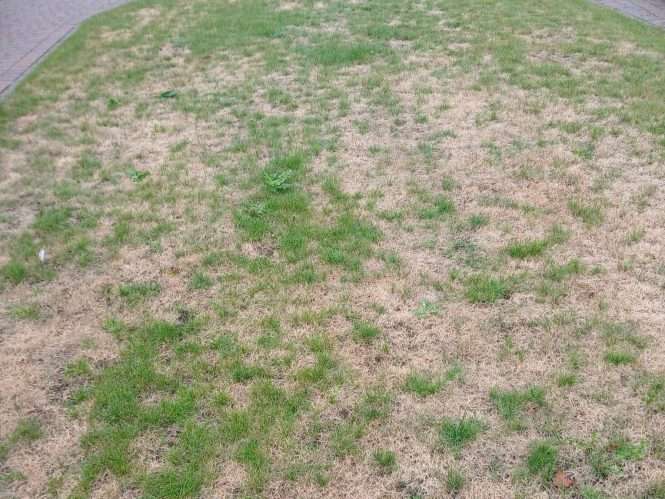
Whilst we had the hot weather like all lawns it went brown and very dry. The recovery is slow, certainly behind all the other lawns in the area. It looks terrible and have no doubt when/if the lawn recovers the red thread will appear again.
I put nematodes on the lawn twice as advised by the person who laid the turf. Unfortunately I don’t think they had any beneficial results.
I am at the point now of thinking I should give up and have false grass.
Have you any suggestions before I take this unwanted step.
Thank you.
Janice
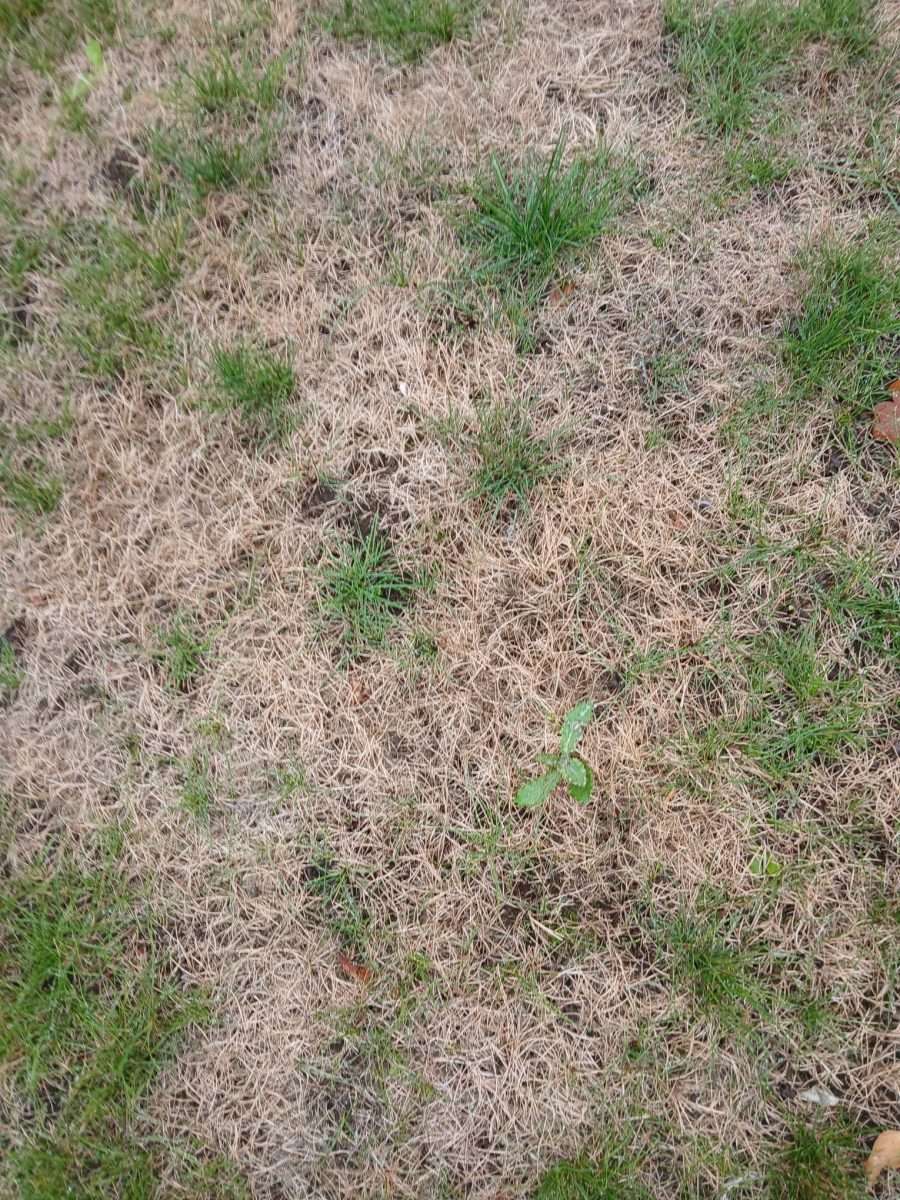
The turfed lawn with a lot of problems.
Hi Janice,
Thanks for your question and good photos. Quite a few things going on here and I’ll try to address them all if I can.
Firstly, going right back to the start, the grass species chosen for turf is never chosen for their ability to resist diseases. They are chosen for their ability to grow quickly, mat together and be lifted reliably for sale. This is one of the [many] reasons why I don’t recommend using turf to create a new lawn. The species of grass you often end up with comes riddled with pests and diseases. Unfortunately, after your first lawn was riddled with red thread, you then changed your grass to the same type, which was [unsurprisingly] also riddled with disease, not improving the outcome in any way. Never mind, what’s done is done.
The next problem is the fact that the lawn dried out quickly and is not recovering. This is most likely due to a shallow root system. The soil under the new lawn was probably compacted (or laid over a stony subsoil) and has just not put down deep roots. This is also a symptom of many turf grasses, as I explained above, turf grasses are picked for matting together and not putting down deep roots.
Finally, you say you put down nematodes as advised by the person who laid the turf. This wasn’t ever going to “improve” the lawn. It was just going to help prevent it by being eaten completely. Again, another common problem with turf is that it is often bought with leatherjackets in situ and the lawn is subsequently eaten to nothing before it even sees its first summer. The person that laid the lawn obviously knew this, hence the advice. The very best outcome from applying nematodes is that nothing happens. They are a preventative measure.
So what to do now?
If this was one of my lawns, I would look at a full autumn regeneration. I would prioritise sorting out the soil. Either kill the whole lawn and rotavate it thoroughly, or more easily aerate it professionally. Then look at scarifying it to clean it out and reseeding the lawn with a reliable British grass seed mix. This will put down a good, strong root system and be much more resistant to pests and diseases than any turf you can buy. Optionally I would consider top dressing with a professional compost and then just leaving it to grow through the winter. You will then have a great lawn for next year. Keep that fed and mown well and it should do well.
I would really recommend getting the work done by an independent lawn care company though, as they will be able to advise and do all the work for you.
Good luck!
Kris, The Lawn Man